

The Federal Minister for Economic Affairs and Energy, Peter Altmaier, today granted ministerial approval for the merger of Miba’s and Zollern’s plain bearing activities, subject to certain conditions.
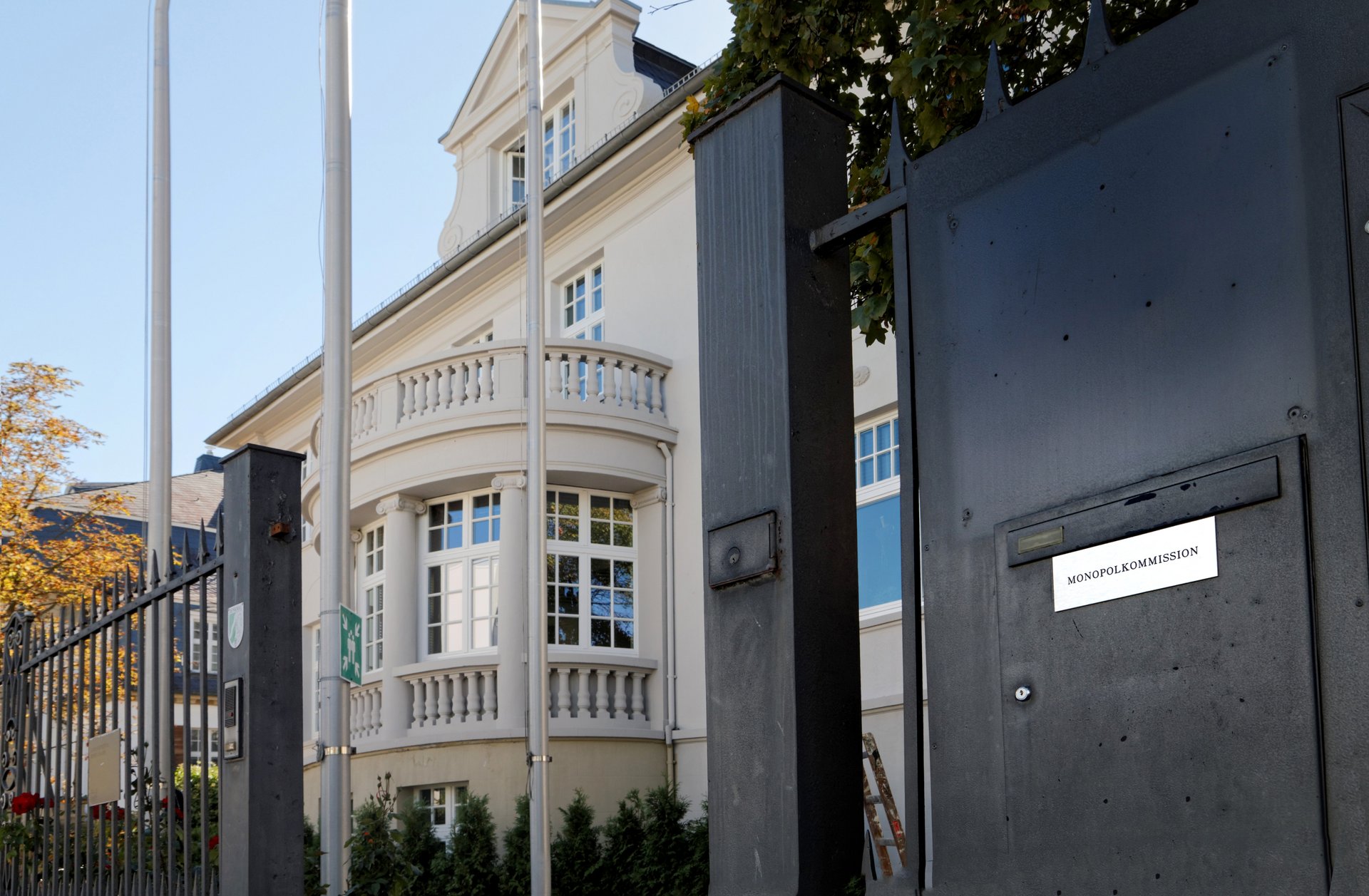
In its statement of 18 April 2019, the Monopolies Commission recommended that ministerial authorisation should not be granted.
On 5 August 2019, the Monopolies Commission issued a statement on the proposed conditions in a draft decision for the Miba/Zollern ministerial authorisation procedure. It reached the following conclusion:
As the Monopolies Commission noted in its statement of 18 April 2019, the Federal Minister for Economic Affairs states in the draft decision that the potential benefits to the public interest put forward by the companies in their application for ministerial authorisation cannot justify authorisation under Section 42(1) of the Act against Restraints of Competition (GWB). European public interest considerations are not recognised as benefits to the public interest. Whilst safeguarding jobs and strengthening international competitiveness may, in principle, constitute public interest benefits, they are not present in the present case, even from the Minister’s perspective. Defence policy benefits are also considered, in agreement with the Monopolies Commission, to be insufficiently significant.
The Monopolies Commission takes a critical view of a broader interpretation of the public interest benefit put forward, which relates to the preservation of know-how and innovation potential. Here, the draft order advocates the achievement of environmental policy objectives on the basis of know-how as a possible public interest benefit. However, this public interest benefit would only outweigh the restriction of competition in the present case if ancillary conditions were to increase and safeguard the weight of the public interest grounds. Consequently, the companies would, amongst other things, be obliged to invest 50 million euros in Germany over the next eight years for specific purposes monitored by a trustee.
Criticism was also levelled at the suitability of this investment condition for reinforcing and safeguarding the purported public interest benefit of ‘know-how and innovation potential for the energy transition and sustainability’. Firstly, the use of funds is defined very broadly and is largely at the commercial discretion of the parties to the merger. Secondly, the obligation to invest in Germany may result in research and development expenditure not being incurred where it can be carried out most efficiently. If, for example, R&D expenditure in Austria could more efficiently lead to the development of applications desired from an environmental policy perspective, such as plain bearings for wind turbines or marine engines, this efficiency advantage would necessarily remain unexploited.
The Monopolies Commission has also expressed considerable doubts as to the legality of the ancillary provisions set out in the draft decision. At the very least, the obligation to invest the sum of 50 million euros in Germany over a period of up to eight years is incompatible with the statutory prohibition on ongoing behavioural control pursuant to Section 40(3), second sentence, of the German Act against Restraints of Competition (GWB). This prohibition also applies where the ancillary conditions are aimed at increasing or safeguarding the identified public benefit and require the undertakings concerned to engage in ongoing competitive behaviour – in this case, investment activity. Nor can the Minister circumvent the prohibition on ongoing behavioural control by delegating the necessary supervision to a third party, in this case the monitoring trustee to be appointed.
Doubts as to the legality of these investment conditions also arise from the perspective of a lack of specificity. A condition must be formulated so clearly that it is immediately obvious how the party to whom it is addressed is to behave. This is already doubtful in the present case, if only because the individual investment projects have yet to be finalised – over the coming years – between the undertakings concerned and the supervisory trustee.