

Jump to content
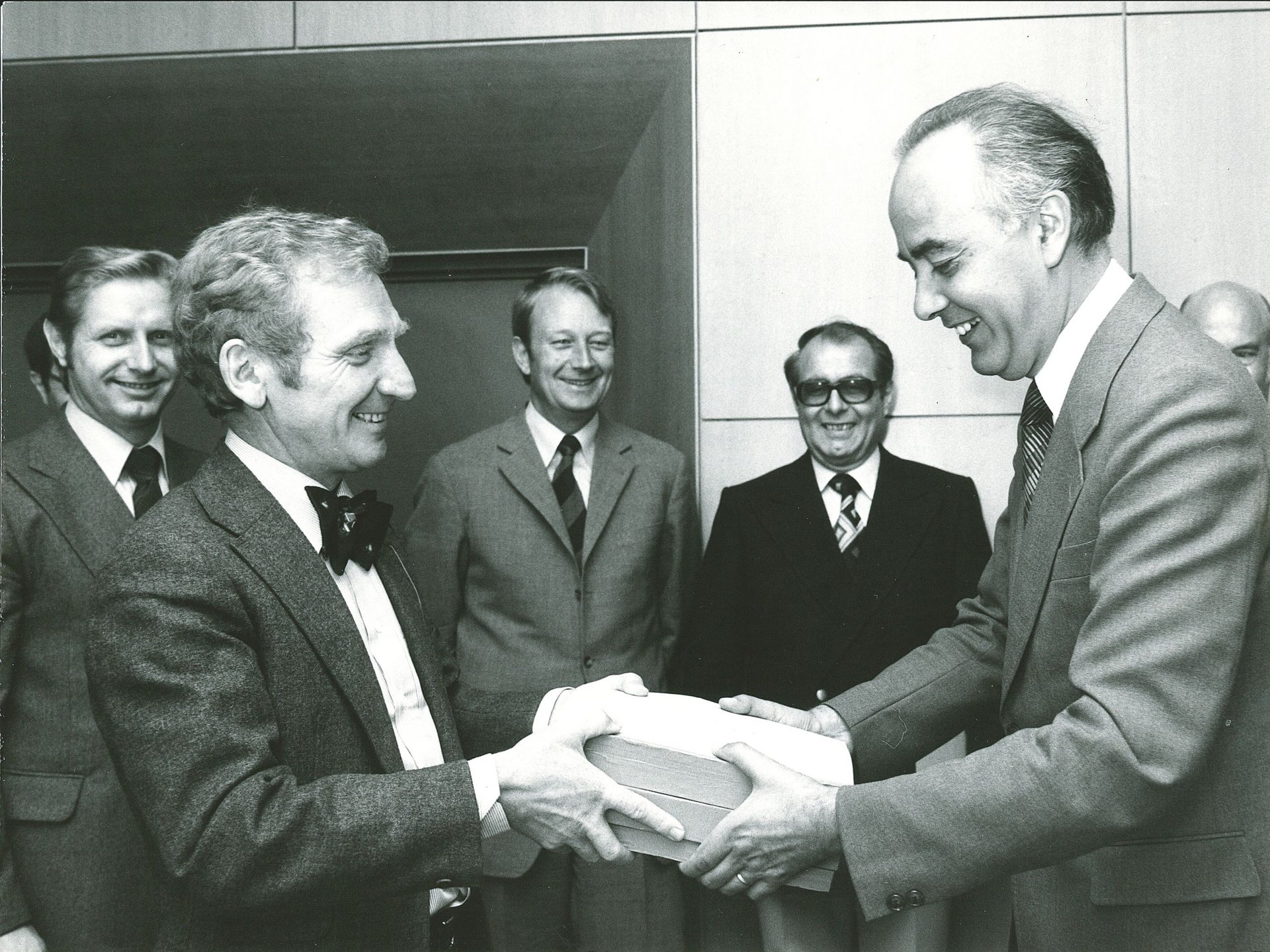
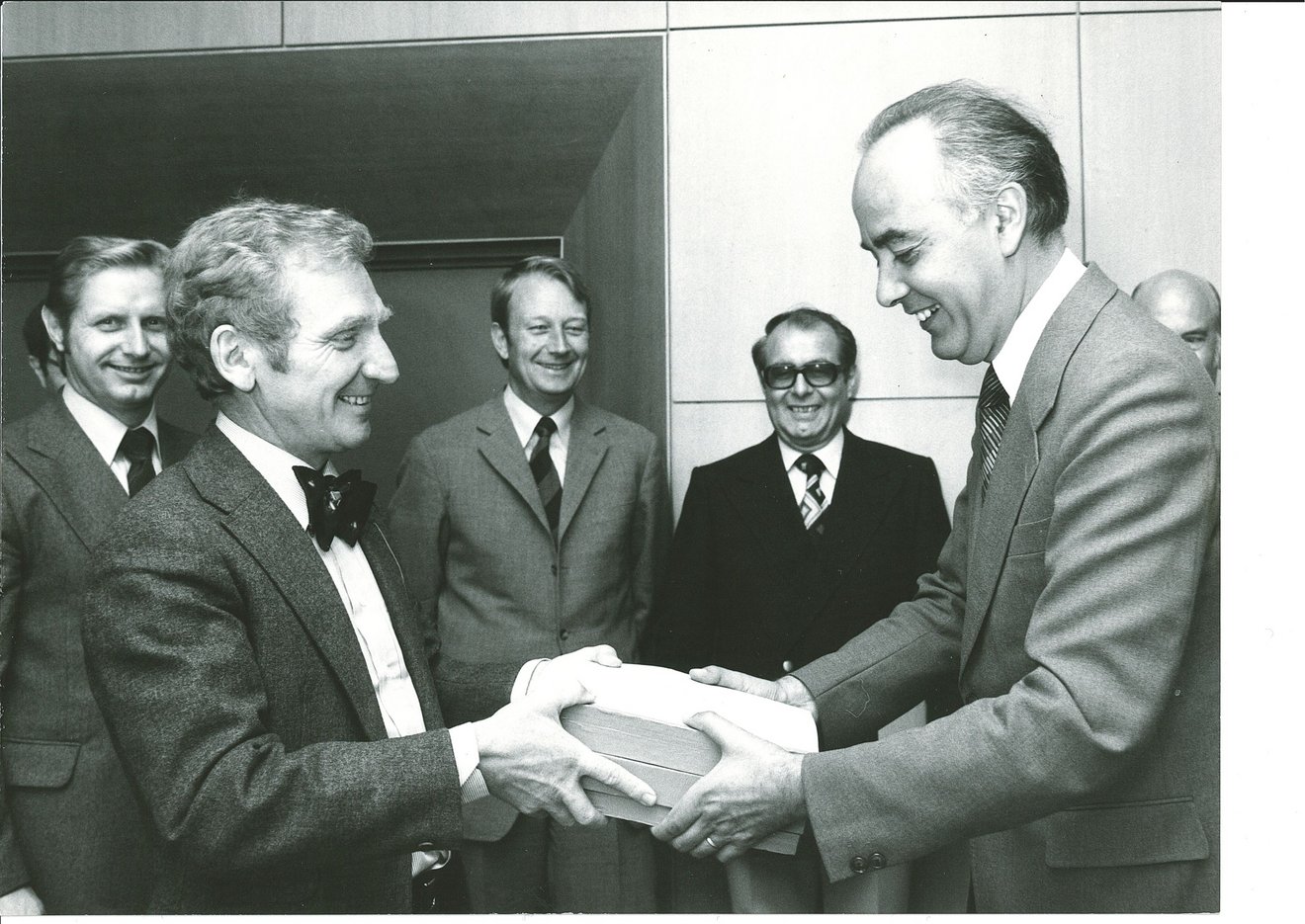
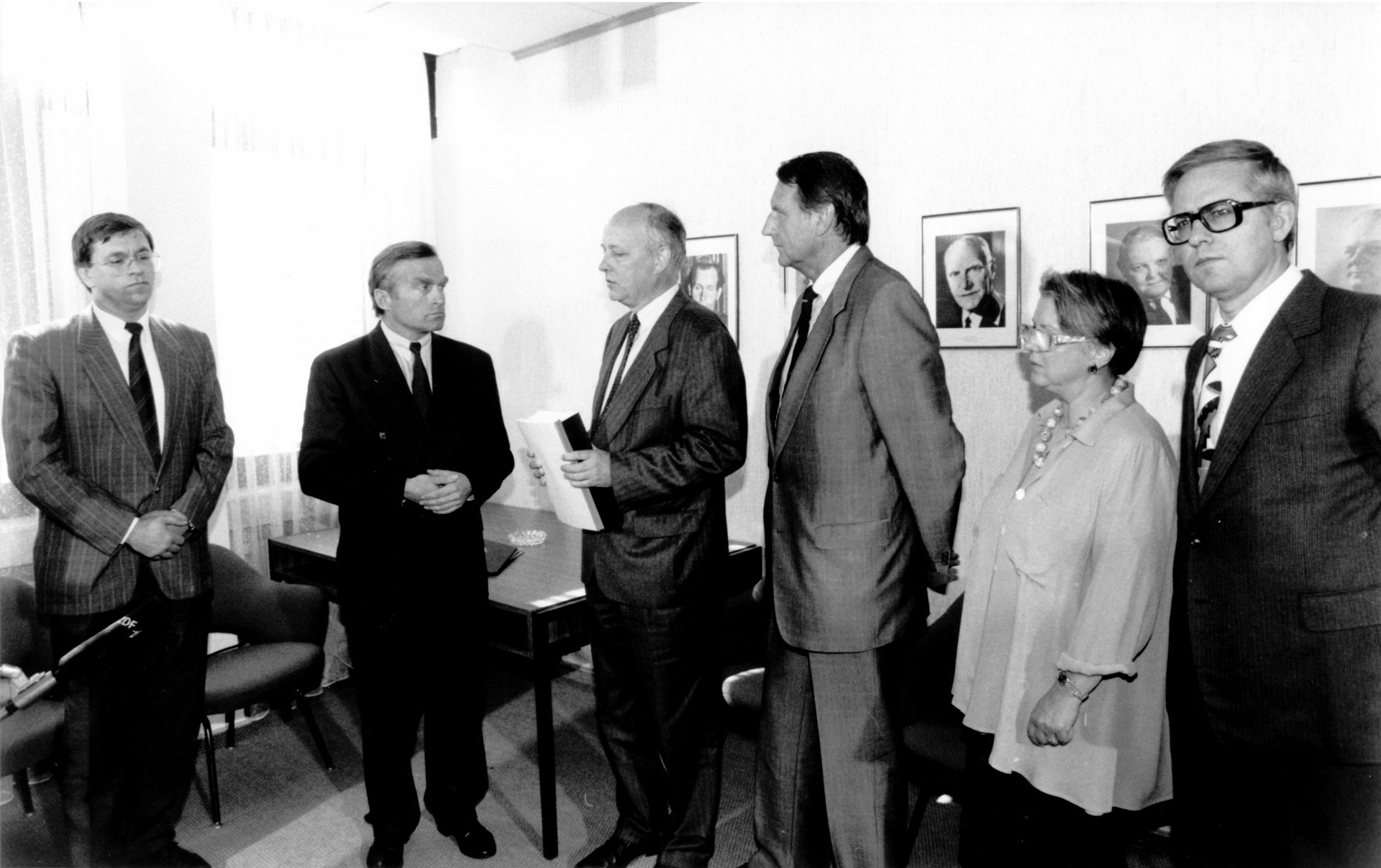
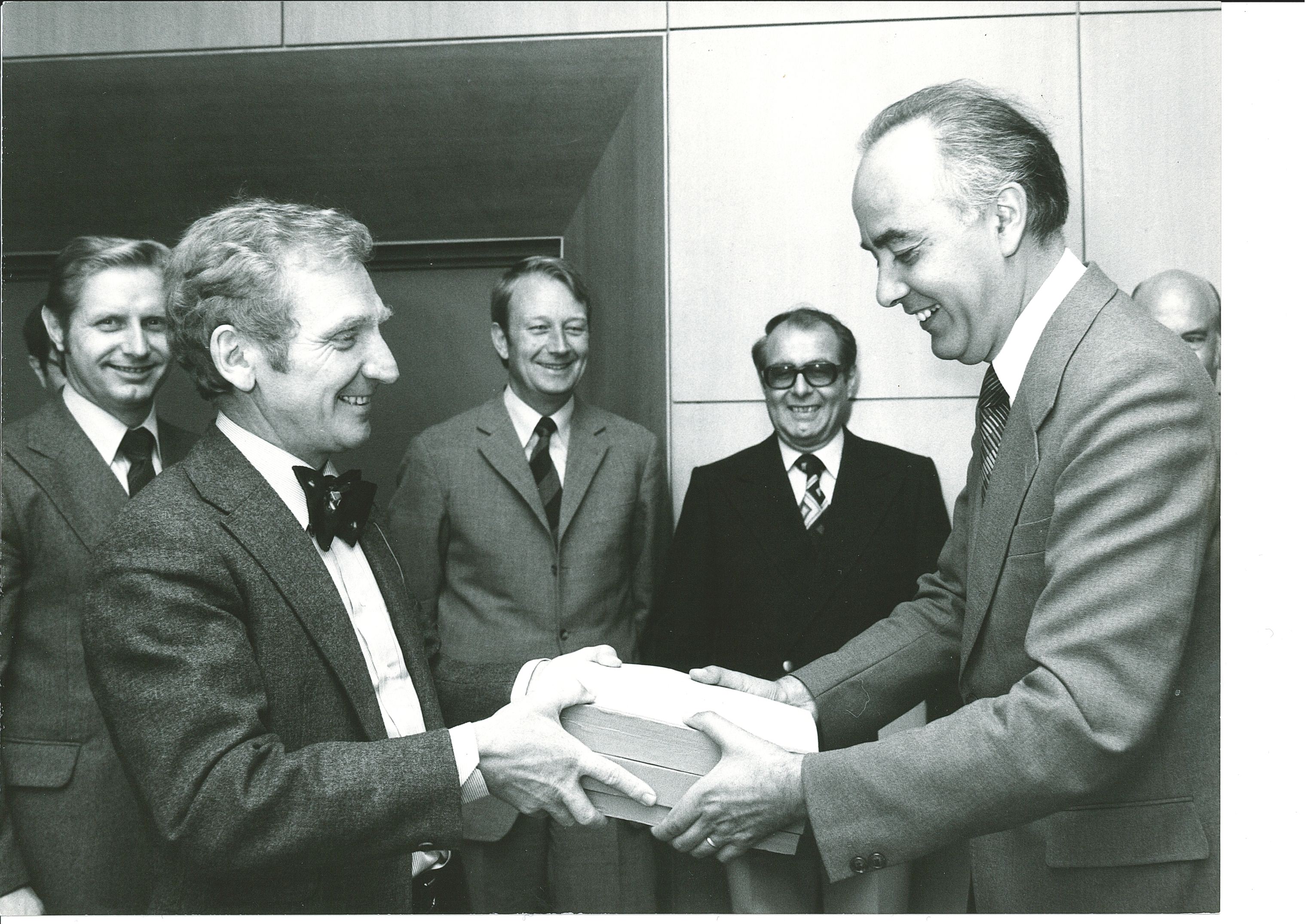
Übergabe des ersten Hauptgutachtens am 22.07.1976 an Bundeswirtschaftsminister Dr. Hans Friderichs in Mainz: v.l.n.r. Josef Murawski, Vorsitzender Ernst-Joachim Mestmäcker, Erhard Kantzenbach, Dieter Fertsch-Röver, Bundeswirtschaftsminister Dr. Hans Friderichs, Dieter Mittelsten Scheid.

Why the Monopolies Commission exists

The Monopolies Commission was established out of the conviction that competition must be protected and economic power limited. Its history began at a time when the Federal Republic of Germany was tightening its regulatory framework and engaging more intensively with the question of how open markets could be safeguarded as companies grew, merged and market power increased.

The Monopolies Commission was established in 1974 alongside the introduction of merger control. As an independent body, it monitors markets, assesses concentration processes and advises policymakers and the public. To this day, it keeps pace with economic and regulatory developments with the aim of strengthening effective competition.


The 1950s and 1960s: The starting point

The groundwork for the subsequent establishment of the Monopolies Commission was laid long before 1974. The Act against Restraints of Competition of 1957 provided the Federal Republic of Germany with a key regulatory framework for curbing cartels and protecting competition as the cornerstone of the social market economy. In 1958, the Federal Cartel Office began its work. Even then, it became apparent that competition requires rules and institutions to safeguard it.

In the 1960s, another issue gained prominence. What happens when markets become increasingly concentrated not through cartels, but through mergers? The number of major mergers increased, economic power became concentrated in individual sectors, and concerns grew that competition law did not yet provide an adequate response to this development. This debate gave rise to political pressure to introduce merger control and to ensure that the trend towards concentration was systematically monitored.
 

1974: The establishment of the Monopolies Commission

An important political impetus came as early as 1969. In its policy statement, the new Federal Government announced that it would modernise competition law, introduce preventive merger control and establish an independent Monopolies Commission. This set the course for measures that were enshrined in law in 1974: competition was to be not only protected by law, but also supported by academic research and assessed in the public interest.

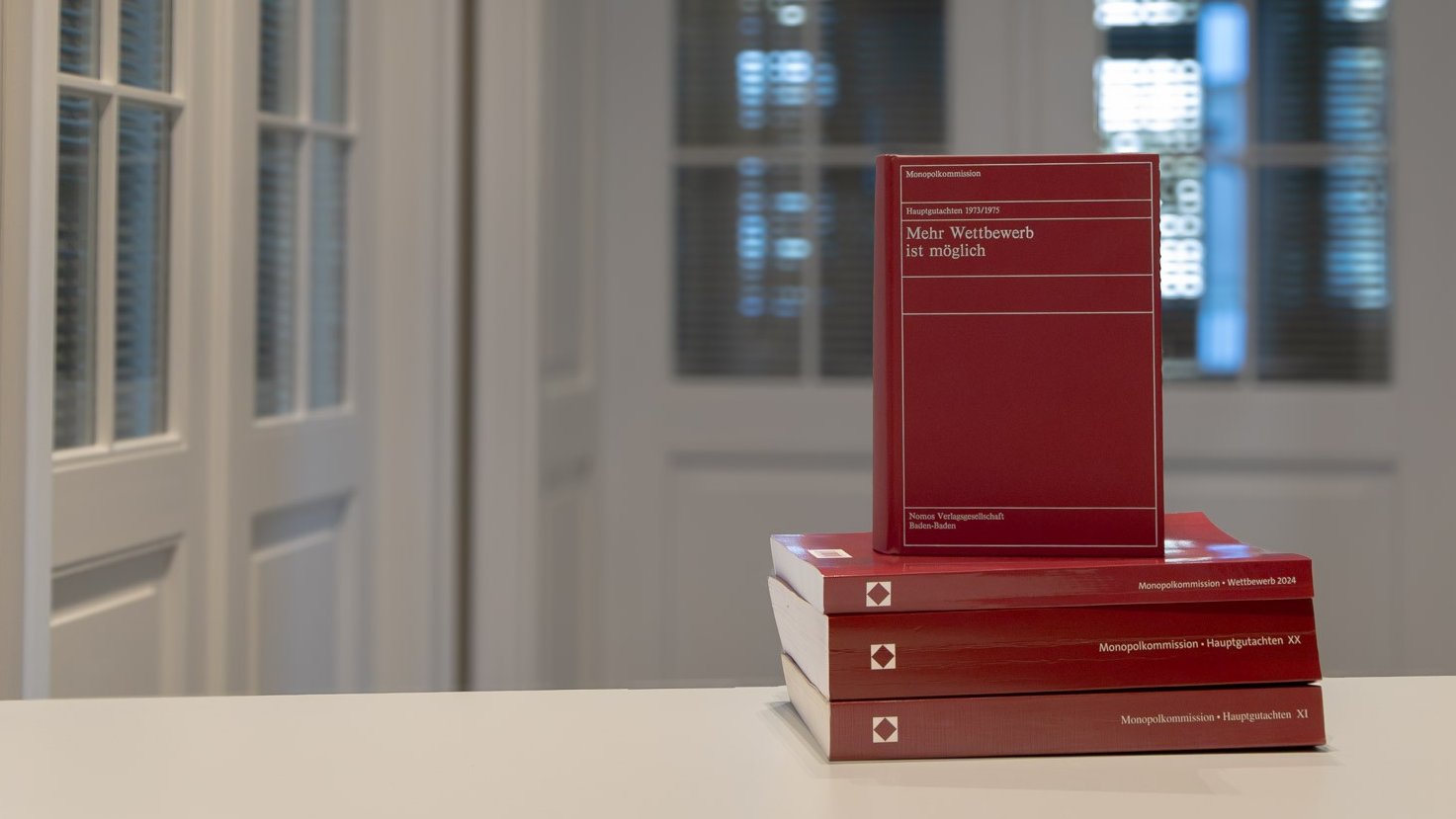
The Second Act Amending the Act against Restraints of Competition (GWB) introduced merger control and, at the same time, established the Monopolies Commission. It commenced its work in 1974 — with a statutory mandate to report on market concentration, to report on decision-making practice under competition law, and to issue opinions in ministerial authorisation proceedings where the Federal Minister for Economic Affairs nevertheless wished to approve a merger that had been prohibited by the Federal Cartel Office. The first major report was published in 1976 under the title ‘More competition is possible.’
 

The 2000s: New challenges in regulated markets

Since the 2000s, the Monopolies Commission’s remit has expanded. In the wake of liberalisation, market opening and privatisation, regulated markets and network industries have come more into focus. This refers to sectors that were long characterised by state-run or state-affiliated monopoly structures.

Through its sector reports, the Monopolies Commission has since regularly monitored the development of competition in the postal, telecommunications, energy and rail sectors. This reflects the view that competition must also be safeguarded in highly regulated sectors.
 

Today: Independent advice for new challenges

Today, the Monopolies Commission provides advice on competition and regulation through main reports, sector reports, special reports and policy briefs. Its regular, statutory duties also include issuing statements on current economic and competition policy issues.

Among other things, it addresses particularly relevant topics such as AI, food supply chains, fuel markets and defence issues. In this way, it contributes its independent perspective as the voice of competition to current debates.
 

A history that continues to have an impact today

Over the past few decades, the framework conditions for competition in Germany and Europe have changed fundamentally. Competition law has been continuously adapted to new economic and social developments, merger control has been further developed, and markets that were previously structured as monopolies have been liberalised and opened up to competition. 

This development is the result of the interplay between legislative reforms, regulatory decision-making practice, the development of the law by the courts, and economic and technological changes. As an independent advisory body, the Monopolies Commission has continuously analysed and assessed this process, accompanying it with recommendations. The fundamental regulatory question remains unchanged: how can economic power be limited and the conditions for effective competition be safeguarded?

Even today, new trends towards concentration, structural dependencies and barriers to market entry are emerging. In particular, digitalisation, data-driven business models and global concentration processes present new challenges for competition policy. Competition must therefore be safeguarded time and again. Against this backdrop, the independent advice provided by the Monopolies Commission remains of great importance today.
 

Further content

Cookies