

The fuel discount has been a thing of the past since last night – but at the petrol pumps, the end had long since been factored into prices. In recent days, oil companies have apparently taken advantage of the foreseeable expiry of the discount to deliberately increase their margins.
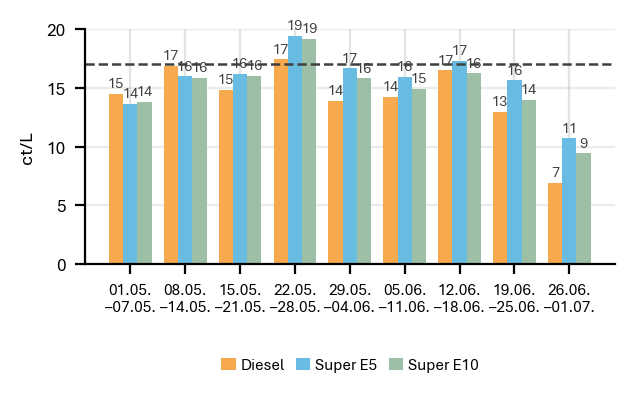
In recent days, the pass-through to consumers has been just 7 to 11 cents per litre, depending on the fuel type, even though the discount should, in theory, have amounted to around 17 cents. This means that more than half of the discount simply no longer reached consumers. This is alarming from a competition policy perspective. This is because the energy tax is levied when the fuel leaves the refinery or storage facility – so a gradual price rise would only have been expected after the discount had actually expired. Instead, prices rose sharply days beforehand. Added to this is the fact that many consumers filled up their cars once more shortly before the discount ended – thereby boosting sales and profits for the companies in the short term.
Our analyses from May and mid-June had already shown that the fuel rebate was passed on for the most part, but not in full – with variations depending on the region and supply structure. This points to competition issues at the refinery and wholesale levels. The behaviour observed as the scheme came to an end confirms our critical assessment: the fuel rebate is costly, lacks precision and dampens important price signals. It is right not to extend it.
- Tomaso Duso, Chair of the Monopolies Commission