
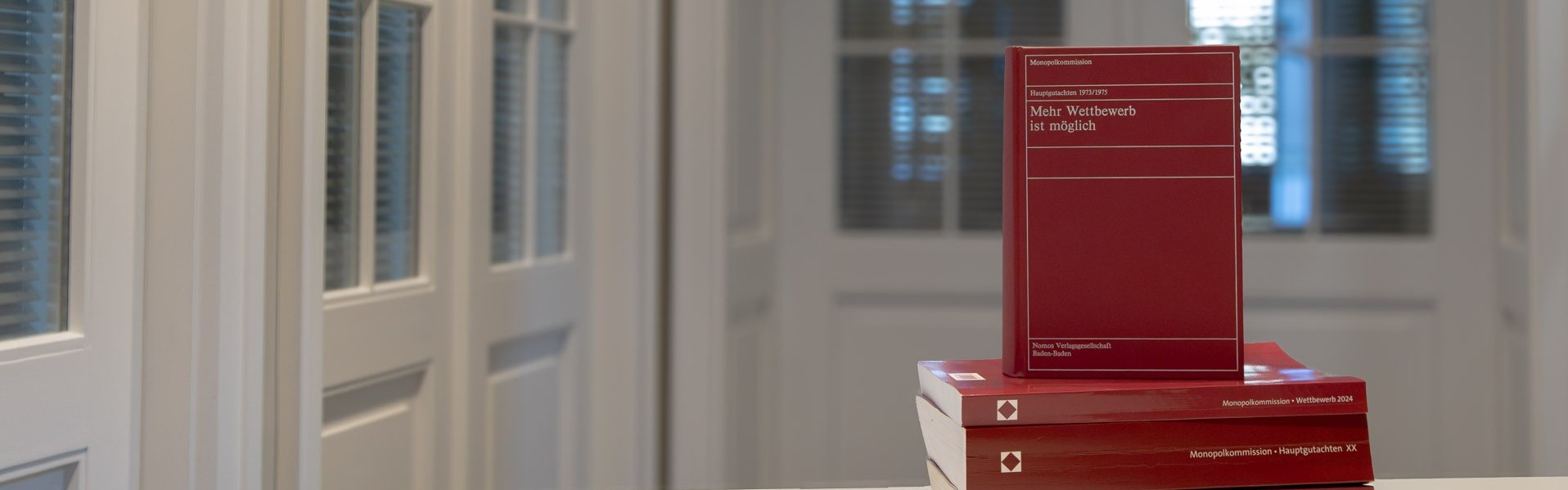
The Monopolies Commission today presented its main report, ‘Competition 2024’, to the Federal Minister for Economic Affairs, Robert Habeck. The report examines numerous politically relevant issues that are crucial for strengthening effective competition in Germany and provides policymakers with specific recommendations for action.
The digital and socio-ecological transformation in Germany will only succeed if the price-reducing and innovative power of competition is harnessed for this purpose.
District heating sector requires price-capping measures
In the context of the planned heating transition, district heating will play an increasingly important role in the future. As alternative heating technologies such as heat pumps cannot be used everywhere, there is a risk that the existing monopolies held by district heating suppliers will expand further, leading to excessive prices. The Monopolies Commission fears that this could, amongst other things, erode public support for the heating transition. It therefore proposes, in the short term, to strengthen existing transparency measures and introduce a market-based price cap to enable competition-compliant prices for end consumers without significant bureaucratic burden.
Measures for greater fairness in the food supply chain
In its concentration analysis, the Monopolies Commission has identified significant shifts in market power within food supply chains since 2007. The trend in prices and costs shows that, on average, producers are achieving ever-lower mark-ups, whilst manufacturers and, in particular, the retail sector are gaining power. This finding indicates that legislative measures introduced in recent years to strengthen producers’ competitive position have had no lasting effect. The Monopolies Commission now plans to examine the causes of these developments in greater detail and to assess targeted options for intervention. However, the Monopolies Commission advises against a short-term extension of the Agricultural Organisation and Supply Chain Act without a more in-depth analysis, as the measures could potentially be ineffective or even harmful.
Planned measures to improve quality in the rail system are insufficient
The Monopolies Commission criticises the merger of the infrastructure companies into ‘DB InfraGO AG’ and the planning projects under the ‘Infraplan’ as insufficient. It recommends that regulatory measures be geared much more directly than before to the needs of rail passengers. To this end, the legislator should first establish, as a matter of priority, socially agreed public interest objectives for the rail infrastructure – such as the targeted volume of traffic and punctuality, particularly in passenger transport. “The shift to rail will only succeed if there is a consistent focus on customers,” said Professor Jürgen Kühling. Clear targets must be set for DB InfraGO AG, and the legislator must then verify that these targets have been met when updating the Infraplan. The variable remuneration components for the railway executive board should also be assessed by the Federal Government primarily on the basis of customer satisfaction indicators and the achievement of corresponding targets.