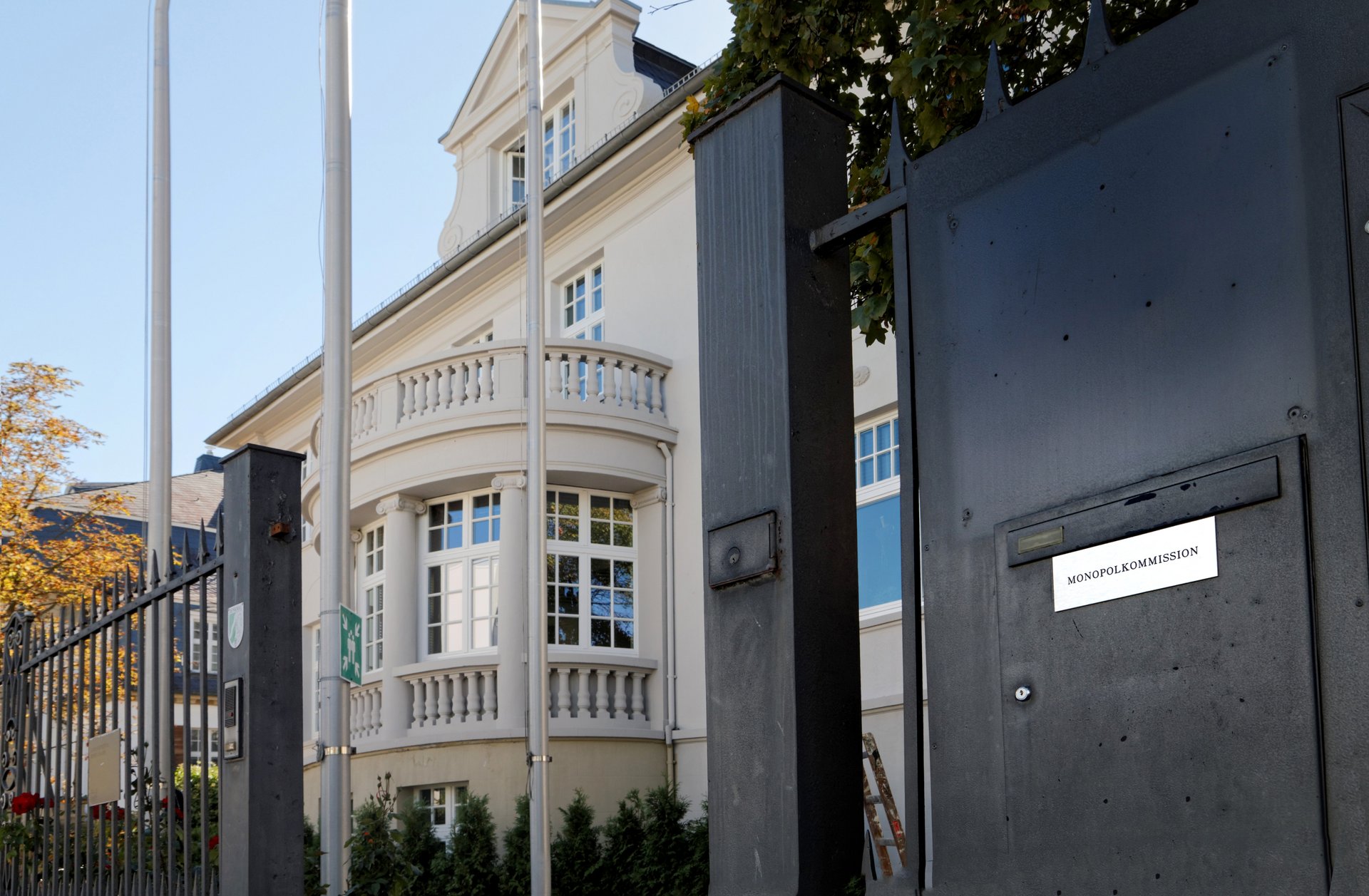


The Monopolies Commission has today published its 72nd special report, entitled “Criminal Sanctions for Antitrust Offences”, concerning the amendment to the Act against Restraints of Competition (GWB) planned for next year.
The special report was prompted by the Federal Government’s plans to further align the provisions on liability for fines in the event of antitrust infringements with European law. In the Monopolies Commission’s view, such harmonisation is legally required. This follows directly from the case law of the European courts on the EU antitrust rules. However, such harmonisation is also to be welcomed in substance. This is because it puts an end to the unequal treatment resulting from the fact that companies are still exposed to different levels of liability risk depending on whether they are being investigated by German or European competition authorities. Nevertheless, the planned amendment is likely to lead to a noticeable increase in liability for companies that are held liable by the German competition authorities in future.
Nevertheless, from the Monopolies Commission’s perspective, it is doubtful whether antitrust enforcement will, in future, lead to a sufficiently profound change in attitudes towards antitrust infringements. The Monopolies Commission sees a key reason for this in the fact that heavy fines imposed on a company have no direct impact on company employees directly involved in the cartel. Consequently, the incentives for company employees to act in compliance with the law, based on the threat of fines, do not exist to the same extent as they do for the company itself (the so-called principal-agent problem).
For these reasons, the Monopolies Commission recommends that consideration be given to criminalising particularly serious competition infringements (so-called ‘hardcore cartels’) as a supplementary measure. In this respect, it builds on its analysis in the XXth Main Report on the same subject. In this special report, the Monopolies Commission sets out specific proposals intended to serve as a basis for discussion in the ongoing legislative process.