

Jump to content
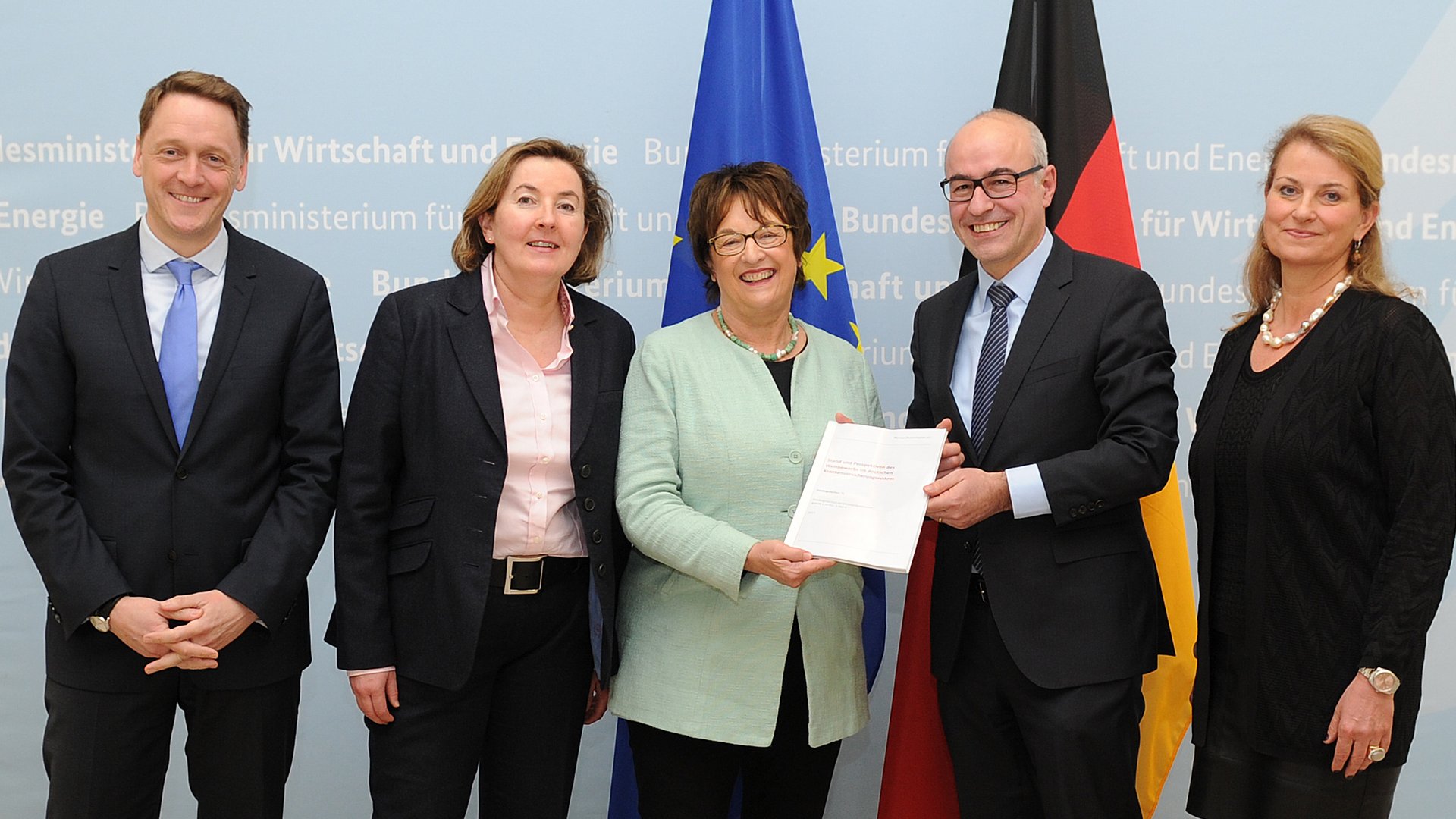
Sondergutachten wird von Mitgliedern der Monopolkommission an Bundeswirtschaftsministerium übergeben
  • The Monopolies Commission has criticised a lack of competition in the statutory and private health insurance sectors, which reduces the efficiency of health insurance and leads to unnecessary costs for policyholders.
  • The Monopolies Commission advocates greater scope for the statutory health insurance system (GKV) in the management of healthcare provision and suggests further developing the risk structure compensation scheme to remedy distortions of competition.
  • The Monopolies Commission recommends a framework to make switching between private health insurers more attractive and advocates simplifying the consolidation of tariff structures following mergers between private health insurers. 

The Monopolies Commission today presented its 75th special report, entitled ‘Current Status and Prospects of the German Health Insurance System’. In this report, it highlights a wide range of untapped competitive potential within the health insurance system in Germany. If this potential were to be realised, it could significantly improve the long-term viability of the health insurance system. 

Both statutory and private health insurance (GKV and PKV) face major challenges, including those posed by ever-rising healthcare expenditure. The existing health insurance system removes incentives for insurers to seek ways to provide optimal patient care and achieve cost savings. Furthermore, it is time to seize the opportunities offered by digitalisation in the healthcare sector, such as improved prevention through personalised, app-based services or better-coordinated treatment processes through the networking of doctors, patients and insurers. 

Increased competition within health insurance systems is essential to ensure better care for insured persons and to reduce costs.

Achim Wambach, Vorsitzender der Monopolkommission

In order to reduce barriers to competition in the management of healthcare provision under the statutory health insurance scheme (GKV) and to foster effective competition on quality, health insurance funds should offer tariffs in the form of optional tariffs, and the range of tariffs should be expanded. Ways of directing insured persons towards specific healthcare providers should be strengthened, and in the case of selective treatments, restrictions should be permitted on hospitals with which a quality contract has been negotiated. The risk structure compensation scheme should be further developed so that preventive measures are taken into account when allocating funds to health insurance funds. Regional differences in expenditure levels should also be reflected in the funds’ revenues. 

In the private health insurance sector, the options for existing customers to switch from one private insurer to another must be improved. Under the current system, private insurance companies do compete for new customers. However, existing customers have virtually no opportunity to switch from their chosen insurer because they can only transfer a very small proportion of their ageing reserves. The Monopolies Commission recommends a scheme whereby privately insured individuals are given the option to transfer ageing reserves commensurate with their state of health when switching insurers. To reduce barriers to dynamic processes, tariff mergers should also be permitted in the event of company mergers, provided that the benefits under the tariffs are equivalent and the interests of the insured are safeguarded during the tariff transfer.

Further information for editorial teams

Cookies