
According to the Monopolies Commission, concentration in the food retail sector and in parts of the food industry has risen significantly in recent years.
The power wielded by food retailers – and, to some extent, by manufacturers – has increased significantly at the expense of consumers, whilst the agricultural sector is often exposed to global market risks.
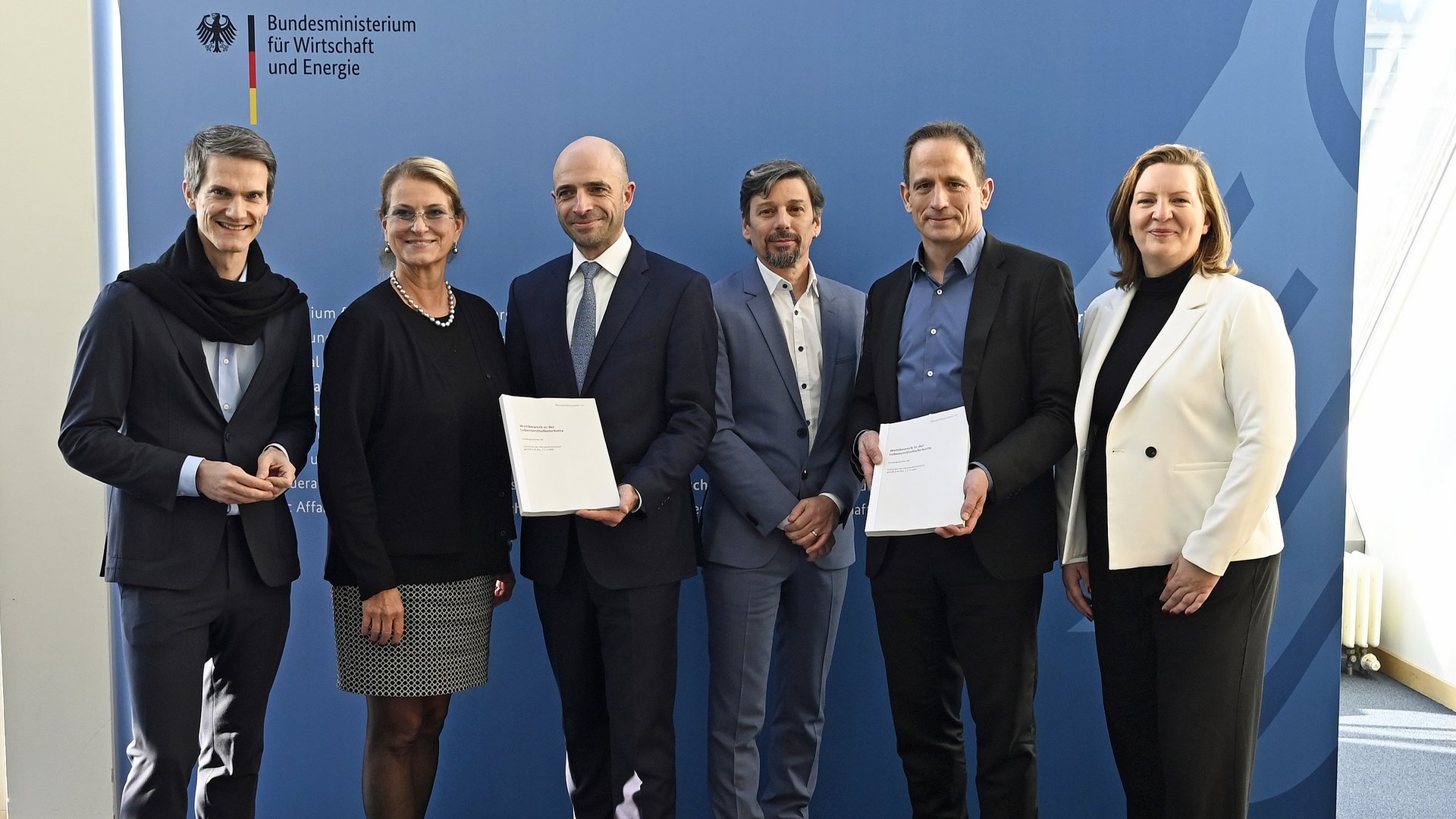
This is due to numerous mergers within the sector and the increasing expansion of retailers’ activities into the manufacturing sector. The Monopolies Commission, an independent advisory body to the Federal Government, today submitted its special report on competition in the food supply chain to the Federal Ministry for Economic Affairs and the Federal Ministry of Agriculture. In the report, the Monopolies Commission conducted an in-depth analysis of market conditions. This was prompted by the farmers’ protests in 2024 and the high food prices of recent years.
Stricter scrutiny of mergers across the entire supply chain
The Monopolies Commission recommends halting the ongoing concentration in the retail sector and scrutinising future mergers more closely to assess their impact on the entire supply chain. As the already highly concentrated food retail sector is increasingly expanding its activities into upstream market stages, it is no longer sufficient to consider only the effects on direct competitors at the retail level. Mergers in recent years have led to around 85 per cent of the food retail sector being controlled by four major corporate groups: Edeka, Rewe, Schwarz (Lidl) and Aldi. By expanding into the manufacturing sector, retailers are strengthening their negotiating position vis-à-vis manufacturers. For some products, they are entering into direct negotiations with the agricultural sector.
The Commission also sees an urgent need for action at the manufacturer level. Companies that process agricultural produce are regarded as manufacturers. “The process of concentration in the food retail sector must not be allowed to continue at the manufacturer level,” said Duso. For some food products, individual companies already hold significant market power. The Monopolies Commission recommends that it is essential to safeguard the remaining competition and to scrutinise further mergers more closely.
To better understand the competitive effects of mergers, the Monopolies Commission advocates systematically assessing mergers retrospectively – using so-called ex-post evaluations. “Those who do not learn from the past end up paying the price. Ex-post evaluations based on sound data can show how mergers actually affect competition,” emphasises Duso.
Effectively countering abuses of power
In the Monopolies Commission’s view, these changes in market structure and market power within the food supply chain necessitate more effective controls to prevent the abuse of market power.
Although there are already laws against unfair trading practices, farmers are often reluctant to report incidents or lodge complaints. We therefore need more rigorous enforcement of existing rules.
In this area, law enforcement by the Federal Office for Agriculture and Food and the Federal Cartel Office could be improved.
Increasing concentration and rising food prices
The Monopolies Commission’s recommendations are based on various empirical analyses. These show that the average profit margins of retailers and manufacturers have been rising for over ten years – in parallel with the processes of concentration at both levels. Over the same period, consumer prices have risen more sharply than in many other EU countries. As a result, the gap between producer and consumer prices is widening further. “The high level of market concentration and rising mark-ups on food by manufacturers and retailers are a cause for concern. Competition at these levels has been weakened, whilst farmers – particularly in the dairy and meat sectors – have gained little in the long term,” explains Tomaso Duso. Although farms were able to record significant short-term profits in some marketing years, they have benefited very little from rising food prices in the long term.
Improving the framework conditions for agriculture
Agricultural businesses are currently undergoing a dramatic structural transformation that cannot be halted. If these businesses are to remain competitive in the long term, we must improve the framework conditions.
The Monopolies Commission believes that the key to improving the competitive position of the agricultural sector lies primarily in managing costs. The ongoing trend towards more cost-efficient production and larger farm structures can better mitigate risks. The bureaucratic burden on the agricultural sector must be reduced. Furthermore, it makes sense to adjust agricultural subsidies: criteria should be geared more towards productivity, innovation and sustainability rather than purely the size of the land area. This would also enable smaller farms to strengthen their position.
Agricultural businesses are under pressure from many sides. On the one hand, they must meet rising societal demands regarding sustainability, animal welfare and environmental protection. On the other hand, they must cope with income risks: fluctuating weather and climate conditions, as well as producer prices which, particularly in the dairy and cereal sectors, are determined by the world market. Crises and supply-and-demand shocks are reflected in these prices.